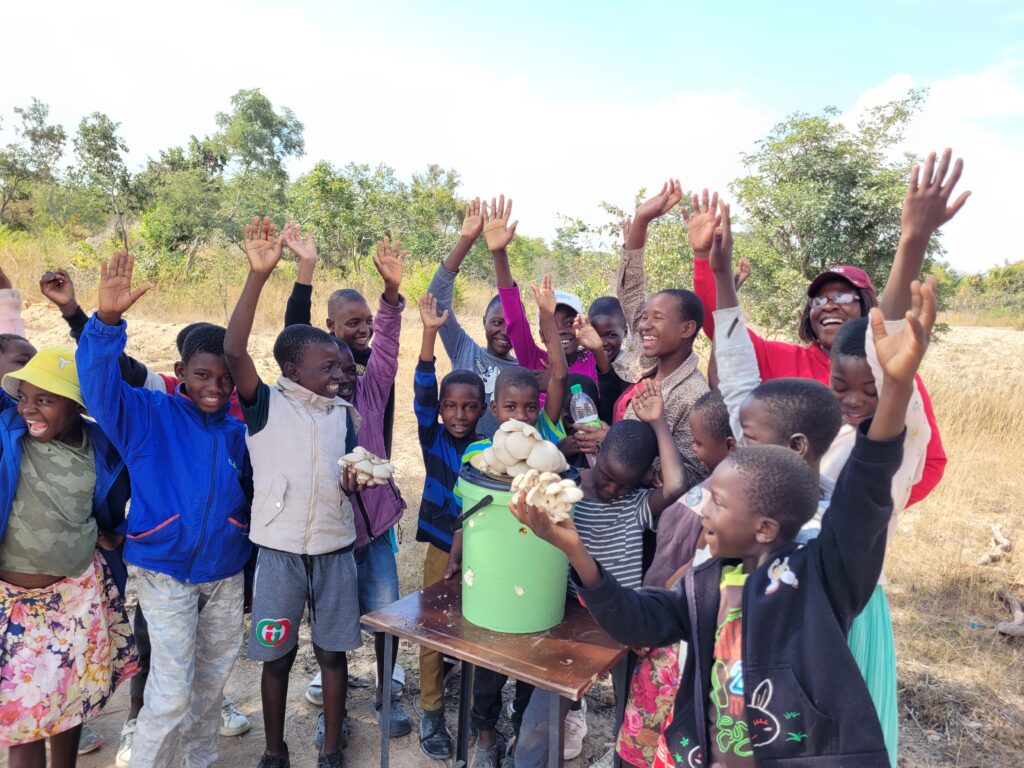
A look of disbelief!
The look of disbelief spread across everyone’s faces, children and facilitators alike. We listened intently as Samie narrated a terrible incident that had recently befallen our community, four families had their cooking huts burnt to the ground in the night by an unknown assailant. Fortunately, no one was physically hurt, but the shock was palpable. Owing to the fact that,
the incident was undoubtedly a cause of great pain for these families, we had to gently admonish Samie for narrating the story with so much theatrical excitement. Samie, being a vibrant and extroverted individual, had an unexpected response for us,
“But this has happened in my ecosystem…!”
Without a doubt, Samie’s “ecosystem” statement lightened the heavy mood and brought smiles to our faces. The connection between a neighborhood crisis and the environment was unconventional, to say the least! Yet, it beautifully laid the foundation for the day’s recap session of our latest Living Organisms Themed Camp, which ran from the 13th to 25th of April 2026.
Key milestones reached?
Through interactive, hands-on activities, our 8- to 13-year-old beneficiaries explored, observed, took field trips, and experimented. It was truly amazing to witness their growth. By the end of the camp, the children were able to;
1.) Identify major categories of living organisms, they mastered the distinct roles that animals, plants, fungi, and bacteria play in keeping our world alive.
2.) Map local ecosystems, they identified the exact ecosystems in our own community and the services they provide, from aquatic ecosystems like the small Chikupo stream and the wetlands where cows freely graze, to terrestrial ecosystems like the forests they frequent to gather mushrooms during the rainy season.
3.) Maintain a practical model for learning: The children successfully cultivated and managed a fruiting mushroom bucket.
Practical models for learning
Our camps are guided by a three-phase curriculum where establishing practical models for learning is an essential element. While our beneficiaries engaged in several hands-on activities, the session where we explored fungi made the fruiting mushroom bucket one of the most popular and curious projects.
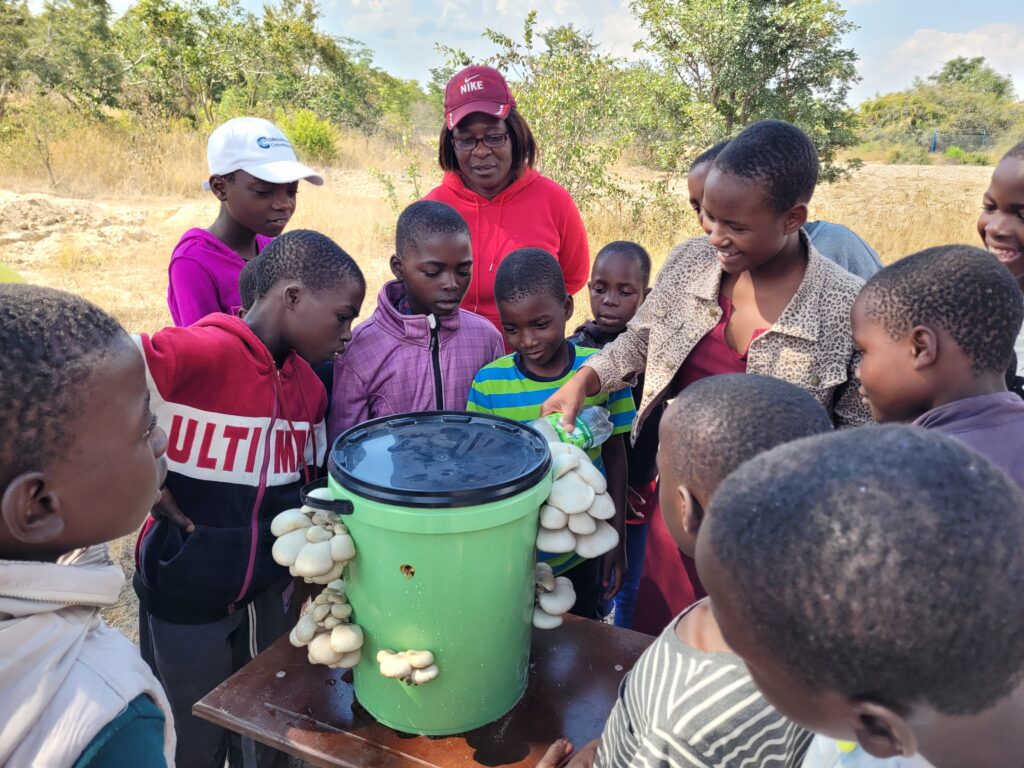
Now, a few weeks after the camp concluded, the mushroom bucket is still actively fruiting! This ongoing lifecycle provides the children with a living, practical model. A model they can continuously use to recap on what they learned, thus ensuring knowledge gained is fully retained over the long term.
Gains!
While Samie’s clever “ecosystem” comment caught us by surprise at first, it quickly became clear that she wasn’t just making jokes.
Later in the session, she stepped forward as a confident presenter. She explained how fungi support ecosystems by recycling and distributing nutrients which are essential for plants and animals, and ultimately our survival as humans.
Seeing a child transform from having no prior knowledge of these concepts at the start of the camp to becoming a leader who can articulate gained knowledge is precisely why we do this work. The Living Organisms camp didn’t just give our beneficiaries an academic understanding of nature, it activated a sense of urgency and ownership to protect it.
Join us in Overcoming barriers
Do you want to be a part of our journey in empowering these young beneficiaries to change their lives and uplift their community through the Overcoming Barriers project? We would love to have you alongside us.
Get in touch with us on our Contact Page to learn how you can support our upcoming initiatives!